 ISSN: 1108-6963




“Corona-lessons” for reaching socially disadvantaged students in the hybrid music classroom
Mitsi Akoyunoglou (Greece), Nataliya Domnina (Switzerland)
Abstract
During the suspension of face-to-face schooling due to the COVID-19 pandemic, socially, economically and technologically disadvantaged students in most European countries experienced additional inequality in attempting to continue their education via synchronous and asynchronous online lessons. This led educators to search for ways that would allow equal access to all. This paper focuses on the hybrid learning and teaching model for the music classroom and the benefits of a combination of face-to-face instruction paired with online, synchronous and asynchronous music lessons for all students. Suggested blended courses incorporate elements drawn from the Universal Design for Learning (UDL) framework and enhanced with mind mapping technique tools and the creative thinking music model. With a strong focus on maintaining an educational balance in the hybrid classroom, the paper provides music educators with tools to build on a student-centered approach and enrich their teaching programs in ways that would allow equal access to all. In conclusion, the “Corona-adapted-lessons” can prove to be beneficial to music educators in implementing more all-inclusive teaching methods in ways that will encourage and support disadvantaged students and boost resilience in all students during and after the current pandemic health crisis.
Inequalities in education during the COVID-19 pandemic
Even before the pandemic, the world had been undergoing a learning crisis, where most disadvantaged students struggled with various difficulties with accessing educational opportunities, frequently accompanied with learning deficits and higher dropout rates (Thomas & Rogers, 2020). During the first half of 2020, the COVID-19 pandemic forced most European education systems to suspend face-to-face teaching and close schools in order to limit the spread of the virus (ECDC, 2020). This resulted in classes mostly continuing via an online teaching model. The unexpected and abrupt lockdown of schools found most music educators unprepared to move to an online synchronous and asynchronous teaching mode (Daubney & Fautley, 2020). In addition, many students faced various difficulties on a technological, educational, emotional, psychological or social level. Inequalities and challenges ranged from having few or no technological resources to participate in lessons or sharing same resources with other family members at the same time to lacking parental support, struggling with conflicts within the family, not feeling safe at home, being homeless or experiencing loneliness and social isolation (UNESCO, 2020; Onyema et al., 2020; United Nations, 2020).
Socially disadvantaged students beyond the pandemic
Even though the entire educational system has been affected by the public health crisis of the COVID-19 pandemic, social, ethnic and economic disparities intensify inequalities among the student population (Williamson, Eynon & Potter, 2020). The lockdown that was mandated simultaneously in a number of European countries triggered an ‘epidemic of educational poverty’ (Green, 2020). Not all children had the same opportunities to attend online classes, be introduced to new knowledge and participate actively in learning during the lockdown.
According to the data of the European Joint Research Center (European Commission, 2020), in 22 European countries more than one fifth of children lack during the pandemic at least two of the following vital educational resources:
-
Internet access;
-
Absence of a computer or tablet at home;
-
A quiet place to study;
-
Reading opportunities;
-
A key source of daily nutrition.
As Green (2020: 5) posits, “what potentially makes the experience unequal […] is that some locked-down children may be receiving far less mitigating schoolwork than others, and less help with that schoolwork from their families”. These inequalities were especially true for the socially disadvantaged students (Green, 2020; Vignoles & Burgess, 2020) who were in need on various levels, such as access to a computer or a smartphone, an internet connection, resources especially designed for students with learning difficulties, online lessons designed for students with special needs and more. Looking into the future and beyond the pandemic, while schools are reopening in most European countries, perhaps we can learn from our distance education experience to rely more on technology and combine virtual learning environments with face-to-face teaching in the classroom in order to reach all students (Thomas & Rogers, 2020).
Existing literature shows that during normal times parents of a higher socio-economic status tend to be more involved in activities that positively influence children’s learning outcomes (The European Commission’s science and knowledge service, 2019). The current pandemic situation has affected people from all possible backgrounds and social groups shifting priorities and changing established routines. The effects of this “new normal” warrant additional research. However, one paradigm remains unchanged: Educational achievement and engagement of students start with their families/caregivers.
Equity in music education
Within the scope of the research for the application of Music Education in Human needs theory, Bates (2009) argues that "no comprehensive needs theory stipulates that music is itself a basic need" (p. 24). However, it is vital to say that music is a part of every known basic need as it is part of us. We are born with the most powerful instruments: our voice and our body. These tools alone allow us to make music, to comfort, to entertain and to educate through music from the first days of our lives. We are lulled to sleep as babies, we sing and dance when we are happy, we listen to calming sounds of nature, and we feel the heartbeat of the environment around us while fulfilling our basic needs. But the older we get, the less space is dedicated to music development and education. Cultural and economic inequality, social stereotypes, educational programs shape our routine often in an unjust way.
Equity in music education has been the focus of research in recent years. Especially during times of Corona, it is even more urgent to make sure that all children, whether in class, in a hybrid mode or in a blended 26 online synchronous and asynchronous model of teaching and learning, are able to attend, to learn and to participate.
In 2020, existing teaching techniques and approaches were challenged by the “new normal.” Remote classrooms, confinement restrictions, and homeschooling required new ways of reaching out to every student independently of their social and economic status. In order to promote equity in our music classes, we are looking to transform the landscape of music teaching and learning to a more contemporary format that celebrates the musical world students inhabit (Webster, 2017). Webster's realization is extremely relevant at the present times when we are all looking for engaging and inspiring teaching techniques. So what are the tools and ways that will make every student feel connected, included and valued? In search of a learning process that is comforting, easily-accessible and flexible to adapt for hybrid classrooms, we present various approaches that can be used by music teachers to promote an all-inclusive music class.
Revisiting Universal Design for Learning in the music classroom
During the COVID-19 pandemic, music educators faced the challenge of teaching remotely and were asked to find ways for all of their students to be able to continue their education from home, uninterrupted. In most cases, synchronous and asynchronous methods of remote teaching were both used. Other examples were radio and television educational programming, as well as distance learning and home schooling mostly led by parents, guardians and caregivers (World Bank, 2020). However, not all students were able to participate in the learning process equally well. Universal Design for Learning (UDL) offers an educational framework guided by principles that promote equity and access to education for all. In the shift to a hybrid or a blended mode of education that is emerging
during the pandemic crisis, UDL can be revisited and applied in order to reach and teach music to all students. Based on specific guidelines that draw from research on the three neural networks (the ‘what’, the ‘how’ and the ‘why’ of learning) (CAST, 2020), UDL focuses on a flexible lesson planning prepared in advance, so that all learners are included and all barriers are eliminated and dealt with from the start (Halkiadaki & Akoyunoglou, 2018, 2019).
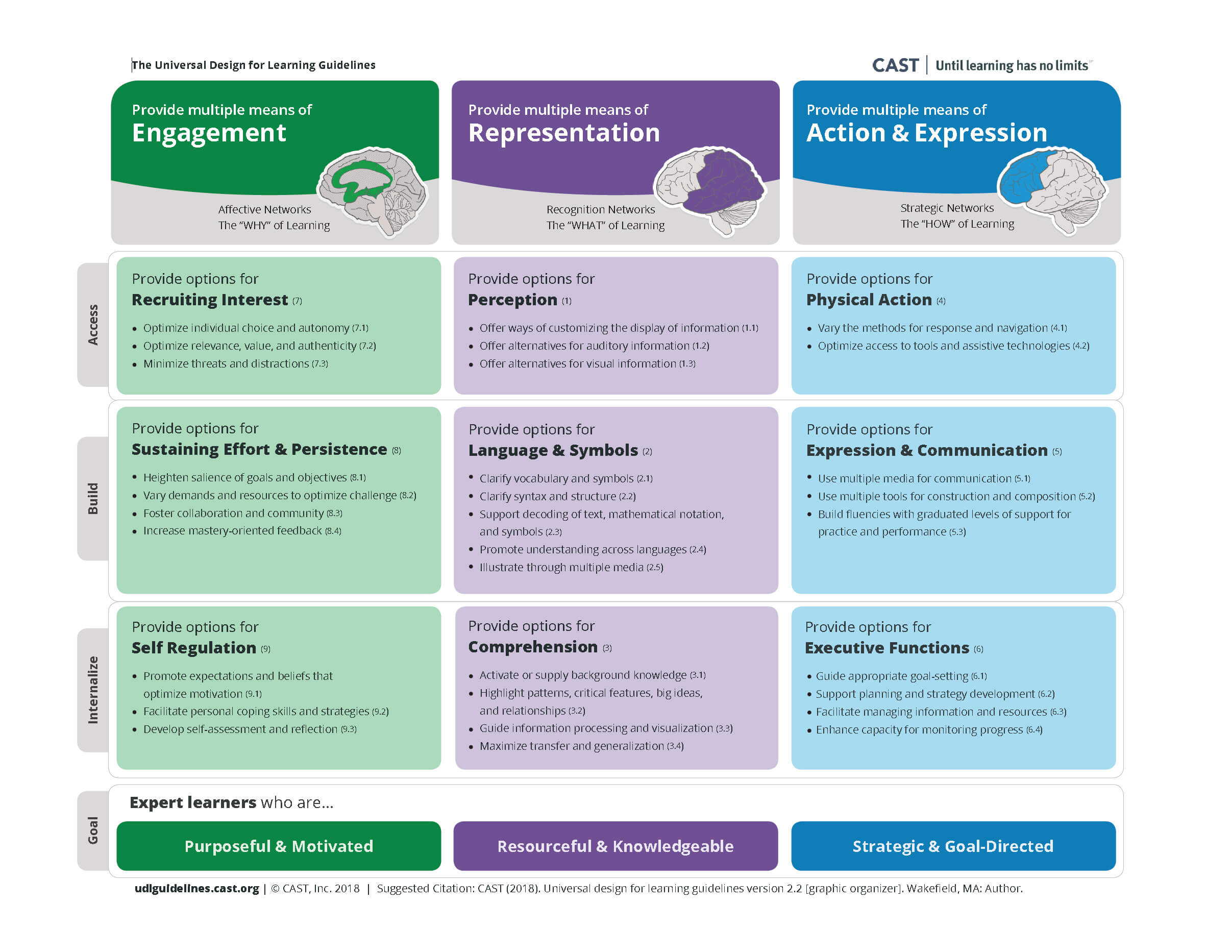
Table 1. CAST (2018). Universal Design for Learning Guidelines version 2.2.
Retrieved from http://udlguidelines.cast.org
The application of UDL in music classes can re-inform teaching practices after the pandemic, so that learners with different capabilities, unique technological profiles, environmental limitations and individual characteristics will be acknowledged from the outset. Considering a blended or a hybrid form of teaching, the three basic principles of UDL that can be applied by music educators are (a) multiple means of representation, (b) multiple means of action and expression and (c) multiple means of engagement and participation. Explicitly, each principle underlies a number of interventions to aid all students in their efforts to participate in the learning process:
-
Since students are unique in the way they perceive, learn and assimilate new information, multiple means of representation offer ways for each unique learning style. Variety in size and color of text and notation, an emphasis on specific
information, a speech-to-text software, tactile alternatives for notation or key visuals, vocabulary and symbols within texts, and digital text with voice recordings, offer students choices that will provide accommodations for possible learning difficulties. In addition, a variety of images or other visual cues, visual notations of music, audio clips, visual description for musical interpretations, as well as video with animation and physical objects can provide visual alternatives of the information presented and assist students in their learning. Also, the use of an interactive whiteboard, of a communication platform, social media, and other similar options can enhance students’ perception, language and comprehension (CAST, 2018).
-
Navigating in a learning environment is different for every student, so providing multiple means of action and expression is fundamental for all learners. According to the guidelines of UDL, there are multiple options a music educator can offer to students for them to express their newly acquired knowledge, such as alternatives to physically responding or interacting with materials, including access to keyboards, touch screens or specifically designed software. Additionally, the use of multiple media, such as storyboards, film, visual art, sculpture, video, physical manipulatives, social media and interactive web tools, provides students with an array of choices for participation. Furthermore, the use of tools such as concept mapping, scaffolding and differentiated feedback can prove useful in responding to each student’s individual needs (CAST, 2018).
-
The degree of motivation and engagement of learners varies within a classroom, so it is essential for the music teacher to find ways to recruit interest and curiosity for learning by optimizing individuality and autonomy of choice as well as minimizing distractions and barriers. There is a need to create an all-inclusive classroom environment, to use routines, calendars and schedules in order to increase predictability. It is important to provide alternatives in working styles, either alone, or in small groups of friends or even in larger groups, and ways that will foster collaboration and community. Moreover, in building community it is essential to promote whole class discussions, to emphasize process, effort and improvement, to create expectations for group work and provide ways for learners to engage in common interests or activities with peers (CAST, 2018).
Universal Design for Learning does not offer one solution but offers multiple alternatives for all (Halkiadaki & Akoyunoglou, 2019). In the wake of a new era following the COVID-
19 pandemic, the aforementioned educational framework can be used by music educators of all levels of education, in order to combine creatively in class, online, synchronous and asynchronous modes of teaching, in ways that will make music learning accessible to all students.
Enriching the current model of music education: Best practices and scientific findings in music teaching adaptation
The post-confinement educational process has evolved and been modified to incorporate techniques developed during lockdown in combination with traditional teaching approaches. Taking into account the uniqueness of the current situation, educators are facing the need to create a continuous routine that will be beneficial and reassuring for students. This section provides examples of the hybrid techniques forming the gradual learning connection between classroom and home:
-
Mind Mapping Techniques as visual learning tools in the hybrid music classroom.
According to Tony Buzan, the creator of Mind Mapping, a Mind Map® is a powerful graphic technique which provides a universal key to unlock the potential of the brain (Tony Buzan Learning Center, 2017; Akbar & Taqi, 2017). It harnesses the full range of cortical skills – word, image, number, logic, rhythm, colour and spatial awareness – in a single, uniquely powerful manner (see fig. 1).
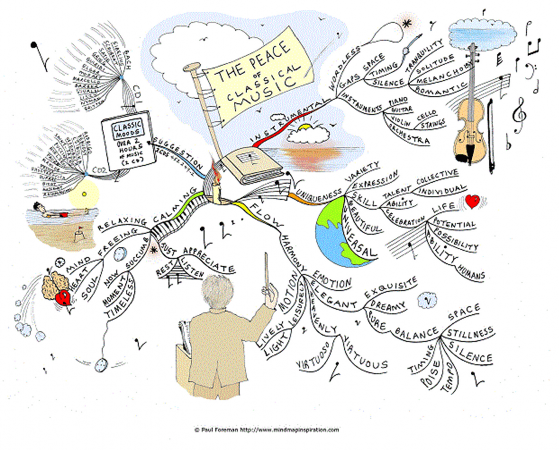
Figure 1. The peace of classical music. Foreman, 2011
The utilization of this graphic tool significantly increases memorization and retention of the knowledge acquired (Çoban & Tokatlı, 2017). Mind Mapping can be performed through software or manually (paper-pencil). Considering the current restrictions,
such as social distancing, limited time in the classroom, and the necessity for a substantial amount of independent study, this technique is widely accessible and easy to use by all students at home, in the classroom or online.
-
Creative thinking in a student-centered model in music class
A student-centered model of music education is widely discussed (Coss, 2019). Nowadays, a controversy exists in the literature in relation to the implementation of a student-centered model in music education specifically. However, we would like to highlight the following suggestions to music teachers that will allow them to work closely with students of all backgrounds and maintain a balance for equal learning opportunities in the hybrid classroom:
❏ Learn and embrace musical traditions of students (Bates, 2018). Transposing and reflecting familiar musical motives close to their heart into education may motivate them to integrate with the class and engage in the music learning process.
❏ Infuse composition and improvisation (Webster, 2016). Experimenting with sounds and composing their own musical compositions encourages individual creativity and shows results to the families as well as to educators elevating music development to a new level.
❏ Effectual Theory (Hanson, 2020). An atypical, impactful form of music teaching, this approach requires students to contend with high levels of unpredictability while learning to make the best of the unexpected. The utilization of limited resources is maximized by placing the students at the center of instruction and applying collective thinking. This approach obeys the motto “Go fast alone or far together”. This method boosts creativity and team work and can be implemented online as well as in traditional ways (letters, phone, printed information, etc.)
❏ Every class project needs to contain online as well as offline completion parts. It is crucial to keep every student responsible for equally significant parts of each assignment.
Boosting resilience in the music class after the pandemic
The pandemic has presented many adversities for students of all ages and more so for at- risk, marginalized or disadvantaged students. Drawing from central themes of positive psychology, resilience, as a term, has been used to describe one’s ability to work through adversities, to succeed despite difficulties and be able to adapt in a positive way (Masten, 2001, 2011). Recently, the definition of resilience has been broadened to include “the capacity of a dynamic system to withstand or recover from significant challenges that threaten its stability, viability, or development” (Masten, 2011: 494). Moreover, in the time of the pandemic, the capacity to overcome adversity has found even deeper meaning
and, as a shared experience of all “it involves struggling well and integrating painful loss experiences” into our daily lives (Walsh, 2020).
The importance of school programs in building and enhancing resilience in students has been stressed in a number of studies (Allen, 2014; Fenwick-Smith et al., 2018). Since art and music have proven to be powerful resilience boosters and confidence builders (White, 2018; Pasiali, 2012), it is crucial for the music educator to take into consideration the increased need to build resilience skills and strategies among their students during and after the pandemic. Three types of intervention can be identified as strategies for building resilience: asset enhancement, reduction of difficulties, risks or stressors, and facilitation of protective processes (Masten, 2001).
-
Focusing on asset-building interventions, the music educator can provide learners with multiple tools and resources to compensate for disadvantages and challenges they might face. A hybrid educational format that combines in class teaching with online learning platforms that are supported by various technological means (smart phones, tablets, laptops) and offline learning platforms with easy and free access from different communication devices (computer, television, radio, mobile phone), can make learning accessible also to students with minimal resources and, by extension, enhance their resilience and self-efficacy.
-
Since economic, social or environmental hardships restrict children’s accessibility to classes (physical or virtual) and affect academic performance and learning outcomes, the music educator should strive to minimize difficulties by focusing “on altering the level of a particular risk” or difficulty in a child’s life (Masten, 2001: 230). The hybrid learning environment provides the music educator many alternatives in order to reach and teach students, support the learning of new musical knowledge and expand their music skills as well as foster feelings of efficiency and achievement. This can be achieved by individually targeted teaching aids and assignments in class or sent by email or a shared free-access teaching platform, musical instruments that are accessible to all, individual tutoring whenever needed, engaging parents’ contribution in joint parent-student music assignments, and providing ways of enriching the physical or virtual music classroom.
-
Drawing from the experience accumulated in online teaching methods during the COVID-19 lockdown, music educators are more equipped to put into practice a hybrid educational model. In combining both the physical and the virtual learning environments, the music teacher is able to moderate difficulties or adversities encountered by disadvantaged students, provide alternatives for students with learning challenges and engage students in both learning methods. This will result in facilitating the learning experience for all students, boosting academic and psychological resilience and maximizing protection against problems faced by children growing up in disadvantages and adverse life circumstances.
The “Corona-lessons” gained during the lockdown period, can prove to be beneficial to music educators in implementing more all-inclusive adaptable teaching models, using multiple online educational materials and solutions (UNESCO, 2020), framing the learning process to be accessible to all by using open educational resources (OER) available in the public domain, and using interactive web-based music tools, such as audacity, musescore, audiotool, beatmaker, chrome music lab, soundgym and many more to enhance collaborative work among students as well as individual learning.
Stephen Hawking said that “we are all now connected by the Internet, like neurons in a giant brain” (Swartz, 2014). This became evident during the lockdown period, when educators began to connect with other educators through various social media platforms, in order to reach out, collaborate and share knowledge and experiences. As the need for online education presented itself, music educators responded by connecting with the larger educational community and strived to maintain communication with their students. This has been a learning process for most of us, where we have confronted our weaknesses and have focused on our strengths, in order to move forward during and after the pandemic by putting in place a blended and/or a hybrid form of teaching, driven by the need to address the educational needs of all our students.
References
Akbar, R.S. & Taqi, H.A. (2017). Does mind mapping enhance learning? International Journal of English Language Teaching, 5(8), 65-77.
Allen, M. (2014). Local action of health inequalities: Building children and young people’s resilience in schools. Health Equity Evidence Review 2, Public Health England & Institute of Health Equity.
Bates, V.C. (2018). Equity in Music Education: Back to Class: Music Education and Poverty.
December 2018. Music Educators Journal 105(2):72-74
Bates, V. (2009). Human Needs Theory: Applications for Music Education. Action, Criticism, and Theory for Music Education, 8(1), 12-34.
Bonk, C., & Graham, C. (2012). The Handbook of Blended Learning. Hoboken: Wiley.
CAST (2018). Universal Design for Learning Guidelines version 2.2. http://udlguidelines.cast.org (retrieved on September 15th 2020).
Çoban, S., Tokatlı, E. S. (2017). The Effect of Mind Mapping Technique on Students’ Achievements in Music Lesson and on Their Attitudes towards the Mind Mapping Technique. Education and Science, 42(190), 423-435
Coss R.G. (2019). Creative thinking in music: Student-centered strategies for implementing exploration into the music classroom. General Music Today, 1-9.
Daubney, A., & Fautley, M. (2020). Editorial Research: Music education in a time of- pandemic.
British Journal of Music Education, 37(2), 107-114.
https://doi.org/10.1017/S0265051720000133 .
ECDC (2020). COVID-19 in children and the role of school settings in COVID-19 transmission.
European Centre for Disease Prevention and Control, Stockholm.
European Commission (2019). Socio-economic background and educational inequalities. https://ec.europa.eu/jrc/sites/jrcsh/files/fairness_pb2019_educational_inequalities.pdf (retrieved on September 15th 2020).
European Commision (2020). Educational inequalities in Europe and physical school closures during Covid-19.
https://ec.europa.eu/jrc/sites/jrcsh/files/fairness_pb2020_wave04_covid_education_jrc_i 1_19jun2020.pdf (retrieved on September 15th 2020).
Fenwick-Smith, A., Dahlberg, E. E., & Thompson, S. C. (2018). Systematic review of resilience- enhancing, universal, primary school-based mental health promotion programs. BMC Psychoogy, 6(30), 1-17. https://doi.org/10.1186/s40359-018-0242-3 .
Foreman, P. (2011). The peace of classical music. http://www.mindmapinspiration.com/the- peace-of-classical-music/ (retrieved on September 15th 2020).
Green, F. (2020) Schoolwork in lockdown: new evidence on the epidemic of educational poverty, published by the Centre for Learning and Life Chances in Knowledge Economies and Societies. http://www.llakes.ac.uk (retrieved on September 15th 2020).
Halkiadaki, M. & Akoyunoglou, M. (2019). The contribution of Universal Design for Learning in the equal participation of students with different learning profiles in music class. In Th. Raptis
& D. Koniari (eds.). Music Education and Society: new challenges, new directions. Proceedings, 8th Conference of the Greek Society for Music Education, Thessaloniki: E.E.M.E. (453-464)
Halkiadaki, Μ. & Akoyunoglou, Μ. (2018). An introduction to the principles of Universal Design in music class: a design for all. Musical Pedagogics, 16, 7-27.
Hanson, J. (2020). Effectual thinking and music education: One view of creative adaptation in an underserved urban middle school. International Journal of Music Education, 38, 1-19. https://doi.org/10.1177/0255761420944034 .
Linder, K. (2017). Fundamentals of Hybrid Teaching and Learning. New Directions For Teaching And Learning, 2017(149), 11-18. https://doi.org/10.1002/tl.20222 .
Masten, A. S. (2001). Ordinary magic: Resilience processes in development. American Psychologist, 56(3), 227-238. https://doi.org/10.1037/0003-066x.56.3.227 .
Masten, A. S. (2011). Resilience in children threatened by extreme adversity: Frameworks for research, practice, and translational synergy. Development and Psychopathology, 23(2), 493-506. https://doi.org/10.1017/s0954579411000198 .
Onyema, E. M., Eucheria, N. C., Obafemi, F. A., Sen, S., Atonye, F. G., Sharma, A., & Alsayed, A. O. (2020). Impact of coronavirus pandemic on education. Journal of Education and Practice, 11(13), 108-121. https://doi.org/10.7176/jep/11-13-12 .
Pasiali, V. (2012). Resilience, music therapy, and human adaptation: Nurturing young children and families. Nordic Journal of Music Therapy, 21(1), 36-56.
https://doi.org/10.1080/08098131.2011.571276 .
Schwartz, J. (2014). Q&A with Stephen Hawking. USA Today. https://eu.usatoday.com/story/tech/2014/12/02/stephen-hawking-intel- technology/18027597/ (retrieved on September 15th 2020).
Thomas, M. S. C., & Rogers, C. (2020). Education, the science of learning, and the COVID-19 crisis.
Prospects. https://doi.org/10.1007/s11125-020-09468-z .
Tony Buzan Learning Center (2017). What is a Mind Map®? https://www.tonybuzan.edu.sg/about/mind-maps/ (retrieved on September 15th 2020).
United Nations (2020). Policy brief: Education during COVID-19 and beyond. August 2020. https://www.un.org/development/desa/dspd/wp- content/uploads/sites/22/2020/08/sg_policy_brief_covid-19_and_education_august_2020.pdf (retrieved on September 15th 2020).
UNESCO (2020). Adverse consequences of school closures. https://en.unesco.org/covid19/educationresponse/consequences (retrieved on September 15th 2020).
Walsh, F. (2020), Loss and Resilience in the Time of COVID-19: Meaning Making, Hope, and Transcendence. Family Processs, 59, 898-911. https://doi.org/10.1111/famp.12588 .
Webster, P. (2016). Creative thinking in music, Twenty-five years on. Music Educators Journal.
102(3), 26-32.
White, J. (2018). Art Therapy With Students at Risk: Fostering Resilience and Growth Through Self- Expression, Canadian Art Therapy Association Journal, 31(2), 111-113, https://doi.org/10.1080/08322473.2018.1512033 .
Williamson, B., Eynon, R. & Potter, J. (2020) Pandemic politics, pedagogies and practices: digital technologies and distance education during the coronavirus emergency, Learning, Media and Technology, 45(2), 107-114, https://doi.org/10.1080/17439884.2020.1761641 .
World Bank Group (2020). Leveraging Lessons from the COVID-19 crisis for learners with disabilities. Inclusive Education Initiative. World Bank Publication.
Vignoles, A. & Burgess, S. (2020). The COVID-19 crisis and educational inequality. (2020, June 1). The Education and Development Forum. https://www.ukfiet.org/2020/the-covid-19-crisis- and-educational-inequality/ (retrieved on September 15th 2020).
26 The terms “blended” and “hybrid” are frequently used interchangeably. However, in the present paper, we use the term blended as a combination of face-to-face learning environment in combination with asynchronous self-paced learning (Graham, 2006) and the term hybrid as the combination of face- to-face and online synchronous and asynchronous teaching and learning (Linder, 2017).